
Gippsland Environment Group Inc
Lobbying against environmental threats on the unceded lands of the GunaiKurnai, Yaitmathang, Ngarigo and Bidwell Peoples
Fire News and Media and Events

Prescribed burning's impact on biodiversity
Research into frequent prescribed burning in a globally important hotspot in southwestern Western Australia reveals a negative impact on endangered species
July 25, 2026 | Don Bradshaw, David Lindenmayer, Phil Zylstra, Kingsley Dixon

Do 'fuel breaks' stack up for us and our forests?
If fuel breaks will have a limited effect on stopping fire spotting and may potentially contribute to crown fires, why are they being constructed? One reason is that firebreak construction provides a source of timber for the native forest logging industry
Chris Taylor, David Lindenmayer | Pearls and Irritations August 31, 2026

Rebutting a recent Victorian bushfire myth
The ‘curse of conservation’ narrative is not supported by empirical evidence.
The Victorian Naturalist

Rethinking Planned Burns: Fire science with Dr Phillip Zylstra
Plus a screening of the short film, Forest Country and a presentation of impacts of burns in local forests by Gippsland Environment Group survey team. Q&A panel with Gunnai Elder Marjorie Thorpe, Dr Zylstra, GEG surveyors and the Goongerah Environment Centre. FREE

Alarm after 27 bodies disappear from charred Aussie bushland
Twelve days after fire crews conducted a prescribed burn, researchers discovered all of the charred reptile carcasses that had littered the ground had "vanished". The findings have huge implications because they suggest the toll on wildlife has likely been underestimated

We may be making Australia’s fire problem worse – not better
Research shows that logging, thinning and prescribed burning can increase forest flammability, challenging long-held assumptions about bushfire risk reduction
David Lindenmayer, Phil Zylstra

Forests, logging, fire and First Nations – the native forest
logging industry re-emerges under different guises
Although the state-owned logging agency VicForests was wound up, many of its employees moved into other parts of government, First Nations corporations, or into a foundation aimed at enabling logging activities on Country under a First Nations banner.

Fire in the Bully
Does a macho culture of bush use influence policymakers to override science and safety concerns, and ignore Indigenous counsel, in bushfire management?
Katherine Wilson | The Monthly February 2026

Victoria’s mountain ash forests naturally thin their trees. So why do it with machines?
In its new forest plan, the Victorian government has funded a “healthy forests” program. This will likely entail reducing the number of trees in the forest and increasing the space between trees. This plan could lead to extensive mechanical thinning in the state’s forests.

After logging bans, Australia turns to “forest thinning” Does it reduce fire risk?
Scientists warn that removing trees can alter forest structure, dry fuels, release stored carbon, and eliminate critical wildlife habitat, meaning the ecological and climate costs may be substantial in high-conservation forests
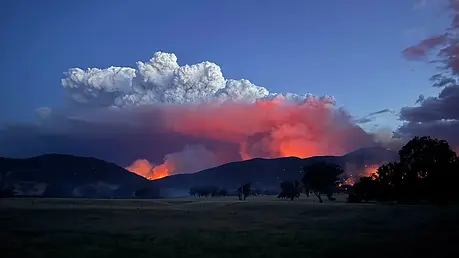
It’s the accepted wisdom on reducing bushfire risk, but doubts are growing
An increasing number of scientists are casting doubt on the practice, arguing the climate has become too hot and the areas of risk too vast for safe and effective hazard reduction.

In 1939, a Royal Commission found burning forests leads to more bushfires
Every year, government workers around Australia start fires in the bush. Over many decades, prescribed burning has settled into a dogma – an unquestionable good.
David Lindenmayer and Philip Zylstra The Conversation December 2 2025

Analysis of the Timber and fibre Strategy
This document has been undertaken to inform the debate around the development of Forest Policy in Australia and to provide a counter weight to the self-serving nature of the Government Strategy document.
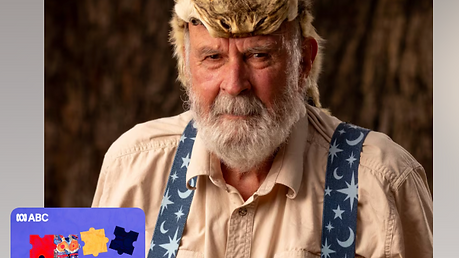
Heart-to-heart with John Wamsley and David Lindenmayer
Why these trailblazing environmentalists won't back off. Meet two men on a lifelong mission. They've ruffled a lot of feathers along the way. Some revere them, others revile them.

There are just 150 of these creamy-flowered shrubs left in the world – and a Victorian fire break could destroy dozens
More than 40 round-leaf pomaderris discovered by environmental community group inside the area earmarked for fire break in July

Warburton Environment VS DEECA Federal Court Case
Warburton Environment is taking DEECA to the Federal Court to challenge the unlawful removal of hollow-bearing trees in Victoria’s State and National Parks under the guise of fire management. W.E . believe no valid exemption under the EPBC Act allows this destruction

Oh, Canada – don’t make the same wildfire mistakes as Australia
Robust scientific evidence showing that effectiveness of planned burning is remarkably limited. In some places, it can reduce fire severity and restrict fire spread for a few years, but afterwards the regrowing vegetation becomes more flammable – an increased fire-risk that can last for decades.
DAVID LINDENMAYER and CHARLES KREBS | THE GLOBE AND MAIL August 18, 2025

Glossy black cockatoos pushed to extinction if burns go ahead
“Glossy black cockatoos could be pushed towards extinction in Victoria if planned burns of 13,000 hectares of forest go ahead, ecologists and conservationists warn. The Victorian government is being urged to abandon the burns."

Take Action: Planned burns
May 2025
Send an email: Ask the minister to put independent oversight in place and regulate impacts using up-to-date science. Fire management planning is happening behind closed doors, without independent oversight, not for biodiversity or for the efficacy of planned burns in stopping fires. All the info on the link

Endearing and fascinating yellow-bellied glider faces ‘inexorable slide’ into extinction
Australia’s most skilled aerial mammal, the yellow-bellied glider, is on an “inexorable slide” to extinction as global heating creates more extreme bushfires that are robbing the species of the food and tree hollows it relies on to survive

Rare Aussie bird under threat 'Catastrophic'
A fierce debate is raging over a plan to torch forest that rare glossy black cockatoos call home.
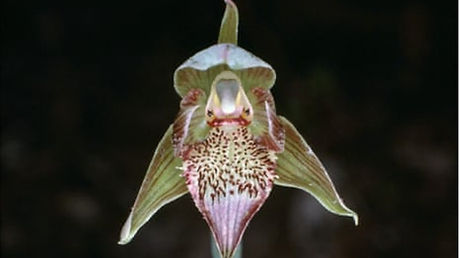
Fewer than 10 of these orchids remain in the wild. Victoria was about to burn them into extinction
Critically endangered flowers get stay of execution after local environmental group threatens legal action against Victorian government

Prescribed burning could be making Aussie forests more flammable
“We’ve understood for a long time now that logging can make bushfires worse, but it’s only in the last few years that evidence is showing that prescribed burning could be doing the same thing,” lead researcher Professor David Lindenmayer, ANU

Sign the petition: Stop broadscale burning of native forest
Evidence shows that this approach is not only damaging to the climate, human health, and the environment but is also ineffective in reducing bushfire risk.

Why native forest logging is the ‘zombie’ industry that won’t die
Under an expanded “strategic fuel break” program, DEECA plans to construct 6000 kms of fire break tracks, up to 40 metres wide, through state forests and national parks by 2030 . Professor David Lindenmayer, one of the world’s most cited ecologists, said he was yet to see evidence that the government’s fuel breaks program would reduce bushfire risks.
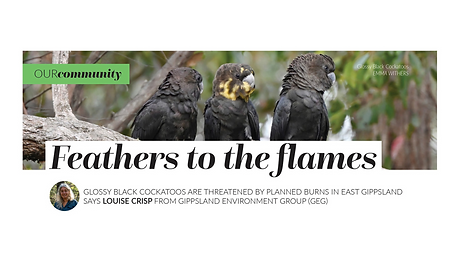
Feathers to the flames
by Louise Crisp
"We won’t stand by as this critically endangered population is driven to extinction."

Has logging really ended in VIC?
What the death of an endangered glider tells us.
By itself, the death of one glider would be sad. But its death speaks to a larger problem. Three kinds of logging are continuing in Victoria’s forests, for fuel breaks, salvage logging after windstorms, and logging on private land.
The Conversation: Lindenmayer, Taylor, Ashman
20 May 2024

Forest up in Smoke
Forest Fire Management Victoria, (FFMV) plan to burn 11,000 hectares of Glossy Black Cockatoo critical habitat in East Gippsland over the next 3 years, 2024 – 2026.

Bushfire response branded 'excessive'
There’s nothing normal about a confronting map showing hundreds of planned burns scheduled across the state. On Thursday DEECA had scheduled 1000 burns for the next three years, including over 120 planned for the next 10 days.

Send a message today: Stop Works. Protect Greater Glider homes
FFMV must put down their chainsaws and stop cutting down hollow-bearing trees in the Yarra Ranges National Park.These works must cease until a proper ecological assessment is done.
Send your elected leaders a message today.

Severe bushfire risk increased by hazard reduction burns, report finds
ABC South East NSW By James Tugwell
1 Feb 2024

Victorian Forest Alliance citizen science team surveys
Threatened species on unceded Brabralung Country in planned burn areas

Research shows old forests are 3 times less flammable than those just burned
We found over time, some forests “thin” themselves and become less likely to burn – and hazard-reduction burning disrupts this process.

FFMV, VicForests and TAFE Gippsland destroy old growth forest near Lakes Entrance
The large 'low intensity autumn burn' trickled through the forest and creeks and destroyed hundreds of old trees, the very structure of the old growth forest

After the Fires. Protecting our forest refuges
Critical areas for protecting fauna and flora affected by the 2019–20 bushfires. Analyses the impacts of the bushfires on select species. Victorian National Parks Association

Fury Over Planned Burns
A protest outside Bairnsdale DELWP has halted a planned burn at Trident Arm in Lake Tyers State Park
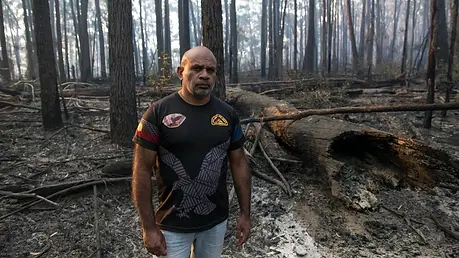
Like the fires never happened: Residents alarmed at Gippsland burns
“This is vandalism and it makes me wild. So many old trees burning up. And when the scrub grows back thick after the burn, you won’t be able to walk through here.” Gunai Bidwell man Derek Hayes visited Mitchell River National Park after the latest planned burns.

Conservation watchdog investigates: Is bushfire tree removal 'overzealous'?
“We fear that demands from industry for salvage logging of burnt public forests is already happening under the guise of road clearing operations.”
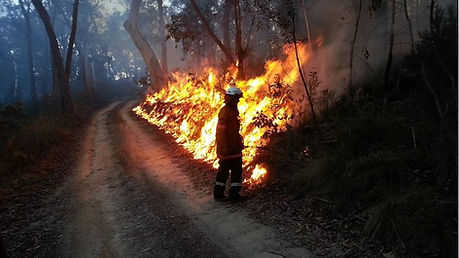
Are hazard reduction burns effective in managing bushfires? The answer is complicated
Research has shown that during catastrophic fire conditions, hazard reduction burns do little to mitigate the intensity and spread of a fire.

Cabbage Tree Palms Flora Reserve
Trees felled to edge of rainforest
“Hundreds, possibly thousands, of trees have been felled in protected forest areas with the approval of DELWP..."

Albany burn-off program defended in wake of devastating bushfires
Bushfires in WA have sparked a blame game between farmers and authorities with many questioning why prescribed burns were conducted, despite an unfavourable weather forecast and multiple warnings that conditions were about to change

Community Rally at DELWP Bairnsdale for greater protection of biodiversity in planned burns
A crowd gathered outside the Bairnsdale DELWP office to protest at the failure to protect threatened species and ecosystems from the impact of planned burns.

Community perspectives on Government fire policy
With Wayne Thorpe Gunnai Custodian, Dr David Cheal, the community view from the ground showing impacts on Parks and Reserves and Peter Gardner, planned burns and climate change

Providence Ponds Fauna and Flora Reserve - threatened New Holland mouse incinerated
In early May, the site of a colony of the rare New Holland Mouse was incinerated in a fuel reduction burn. Department of Environment, Land, Water & Planning and Forest Five Management Victoria carried out the burn in the Providence Ponds Flora and Fauna Reserve west of Bairnsdale.

Open letter: Nowa Nowa- Nelsons Rd Burn 2BNN0029 – request pause and review
Gippsland Environment Group is very concerned about a scheduled burn due to be ignited in East Gippsland along the Ramsar listed Lake Tyers downstream of the township of Nowa Nowa

A public forum on fire to discuss various aspects of fire management including biodiversity loss, forest type, age, fire severity, climate change and public safety, as well options for future management.